
Showing posts with label Malcom Gladwell. Show all posts
Showing posts with label Malcom Gladwell. Show all posts
Thursday, January 19, 2012


Talent is Overrated ... The secret to success? FOLLOW UP
How do world class performers get so good? The common perception is that they are born to do what they do (talent), or they have worked extremely hard to get where they are (work ethic). Research has shown that it has little to do wither either talent or hard work.
Most people will argue that Tiger Woods was BORN to be one of the world's best golfers. There's no doubt that he is very talented and has accomplished things that most others will never accomplish in a lifetime. But in the last post I referred to a book written by Geoff Colvin called "Talent is Overrated". In it, he gives an account of how Tiger got so good at his sport (the short answer: deliberate practice).
The book is a great read because it debunks some common perceptions about how people get so good at what they do and it truly eliminates the mystique of top performers while helping you to realize steps that we can take to improve ourselves.
Paraphrasing from the book:
TIGER WOODS
Woods' father, Earl, was a retired teacher who had a lifelong passion for sports. He was a star baseball player at Kansas State and later coached youth sports teams in addition to teaching cadets in military practices at the City College of New York. He grew to become fanatical about golf and had achieved a handicap in the low single digits, placing him in the top 10% of players. Enter Tiger....he is born into the home of a pretty darn good golfer who loves to teach and is eager to begin teaching his son as soon as possible. Earl is retired and his wife does not work outside the home; they have decided that Tiger would be their first priority.
When Tiger was born, Earl wrote "I had been properly trained and was ready to go. I took over new ground in starting Tiger at an unthinkably early age".
At age 7 months, Earl gives Tiger his first metal club (a putter). He sets up Tiger's high chair in the garage where Earl hits balls into a net and Tiger watches hours on end. Before Tiger is two, they are at the golf course playing and practicing regularly. At age 4, Tiger was being trained by professional teachers.
Neither Tiger or his father suggest that Tiger came into this world with a gift for golf, and Tiger has repeatedly credited his father for his success.
Trying to understand his early interested in the game, Tiger does not talk about an inborn fascination with golf. Rather, he has written, "golf for me was an apparent attempt to emulate the person I looked up to more than anyone: my father".
Another example? Google "Polgar sisters chess".
Going to post a video interview with the book's author- definitely a great way to spend 5 minutes!
Most people will argue that Tiger Woods was BORN to be one of the world's best golfers. There's no doubt that he is very talented and has accomplished things that most others will never accomplish in a lifetime. But in the last post I referred to a book written by Geoff Colvin called "Talent is Overrated". In it, he gives an account of how Tiger got so good at his sport (the short answer: deliberate practice).
The book is a great read because it debunks some common perceptions about how people get so good at what they do and it truly eliminates the mystique of top performers while helping you to realize steps that we can take to improve ourselves.
Paraphrasing from the book:
TIGER WOODS
Woods' father, Earl, was a retired teacher who had a lifelong passion for sports. He was a star baseball player at Kansas State and later coached youth sports teams in addition to teaching cadets in military practices at the City College of New York. He grew to become fanatical about golf and had achieved a handicap in the low single digits, placing him in the top 10% of players. Enter Tiger....he is born into the home of a pretty darn good golfer who loves to teach and is eager to begin teaching his son as soon as possible. Earl is retired and his wife does not work outside the home; they have decided that Tiger would be their first priority.
When Tiger was born, Earl wrote "I had been properly trained and was ready to go. I took over new ground in starting Tiger at an unthinkably early age".
At age 7 months, Earl gives Tiger his first metal club (a putter). He sets up Tiger's high chair in the garage where Earl hits balls into a net and Tiger watches hours on end. Before Tiger is two, they are at the golf course playing and practicing regularly. At age 4, Tiger was being trained by professional teachers.
Neither Tiger or his father suggest that Tiger came into this world with a gift for golf, and Tiger has repeatedly credited his father for his success.
Trying to understand his early interested in the game, Tiger does not talk about an inborn fascination with golf. Rather, he has written, "golf for me was an apparent attempt to emulate the person I looked up to more than anyone: my father".
Another example? Google "Polgar sisters chess".
Going to post a video interview with the book's author- definitely a great way to spend 5 minutes!
Friday, July 29, 2011
Got some time? The 10,000 Hour Rule.
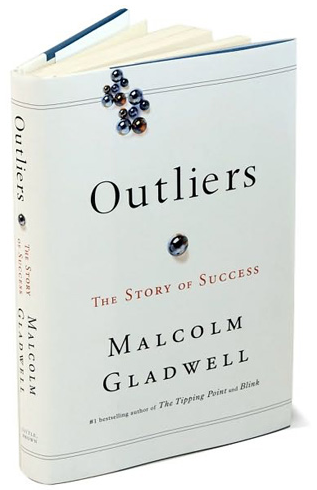

In Malcolm Gladwell's book Outliers: The Story of Success he repeatedly talks about the "10,000 Hour Rule", claiming that the key to success in any field is a matter of practicing a specific task for a total of around 10,000 hours.
Gladwell claims that greatness requires enormous time, using the source of The Beatles' musical talents as an example. The Beatles performed live in Germany over 1,200 times from 1960 to 1964, amassing more than 10,000 hours of playing time, therefore meeting the 10,000-Hour Rule. Gladwell asserts that all of the time The Beatles spent performing shaped their talent, "so by the time they returned to England from Hamburg, Germany, 'they sounded like no one else. It was the making of them.'"
In our multi-faceted role as coaches, it's easy to get lost in the busyness of day-to-day operations in the office, on the court and on the road. Carve out a set time for yourself each day to dedicate to professional development- read a chapter, watch a YouTube video, find some good blogs. A little bit of time each day makes a big difference!
Subscribe to:
Posts (Atom)